
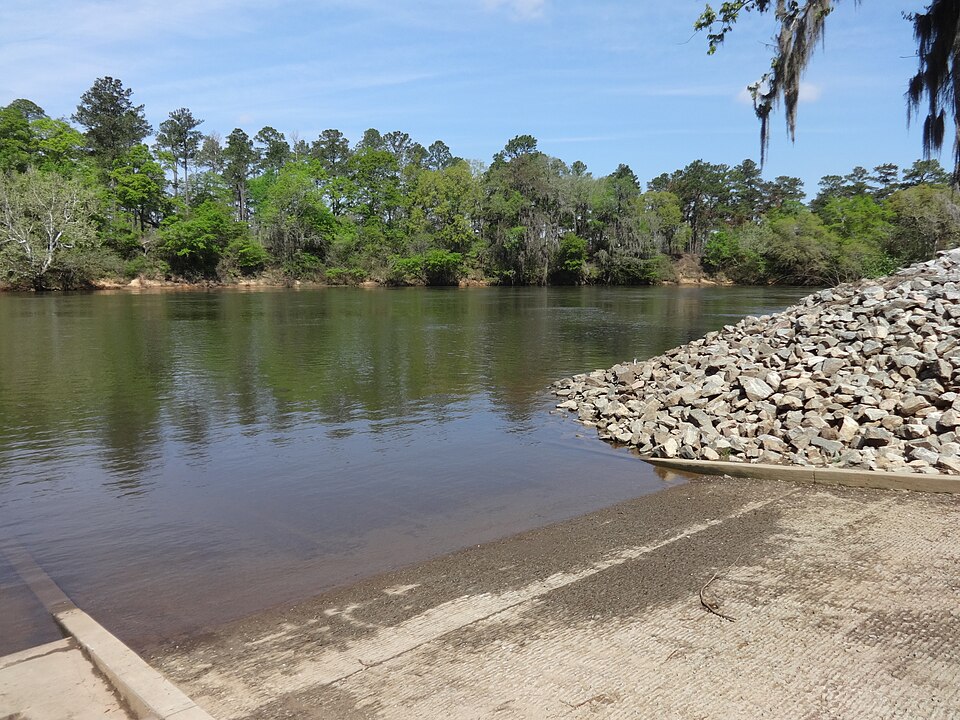
ATLANTA — A river group has taken the city of Atlanta to federal court, alleging that Hartsfield-Jackson Atlanta International Airport keeps sending jet fuel, raw sewage and industrial chemicals into the Flint River, the drinking water source for Clayton County, Griffin and other towns downstream.
Flint Riverkeeper, a nonprofit with its main office in Albany, filed the suit Monday in U.S. District Court in Atlanta, represented by the Southern Environmental Law Center. The complaint accuses the city, which owns the airport and operates it through its Department of Aviation, of violating the Clean Water Act and the federal law governing solid and hazardous waste. The group gave the city formal notice July 29 that it planned to sue, a step the Clean Water Act requires. The river's headwaters lie beneath the airfield, and more than 400,000 people downstream rely on it for drinking water, the suit says.
The airport has logged more than 400 fuel spills since July 2021, and at least nine reached a creek or the river, the complaint says, citing city records. The first of three this year went undetected for eight days in late January and early February while about 28,000 gallons of fuel flowed from airport storm drains into the Flint. Griffin, roughly 60 miles downriver, and other communities warned residents not to drink their tap water, and people in Griffin reported a fuel smell. The suit describes two later spills: one in April of unknown size and one over Memorial Day weekend estimated at 26,500 gallons.
In mid-September, about 33,000 gallons of sewage escaped an airport pump station into Sullivan Creek, which feeds the Flint. Hundreds of fish died, and E. coli levels were "too numerous to count," according to the filing.
PFAS, the long-lasting industrial compounds known as "forever chemicals," are the case's other main focus. River samples taken by the Clayton County Water Authority from 2023 to 2026 averaged 55 parts per trillion of PFOS below the airport, compared with 7.78 above it. PFOA averaged 41.55 downstream and 7.43 upstream. The federal drinking water limit for each is 4 parts per trillion. Clayton County, about 20 miles downstream, and Griffin both top those limits in federal testing data, the suit says.
Clayton County's water is safe to drink, a water authority spokeswoman told the Atlanta Journal-Constitution, and the utility is working on a treatment upgrade meant to strip out PFAS. The airport's spokesperson would not discuss the case with the paper.
Gordon Rogers, Flint Riverkeeper's executive director, told Atlanta News First that "we have seen no meaningful action to prevent future spills." April Lipscomb, a senior attorney with the law center, said her team has had early conversations with lawyers for the city.
The city has not commented publicly on the suit.
The suit asks a judge to order the discharges stopped and to impose civil penalties of up to $68,445 a day for each violation. Beyond its legal costs, the riverkeeper is not asking for money for itself, and it would let the city decide how to fix the problems, WABE reported. Georgia's Environmental Protection Division and the U.S. EPA both have open investigations into the spills and have not announced conclusions or penalties.